
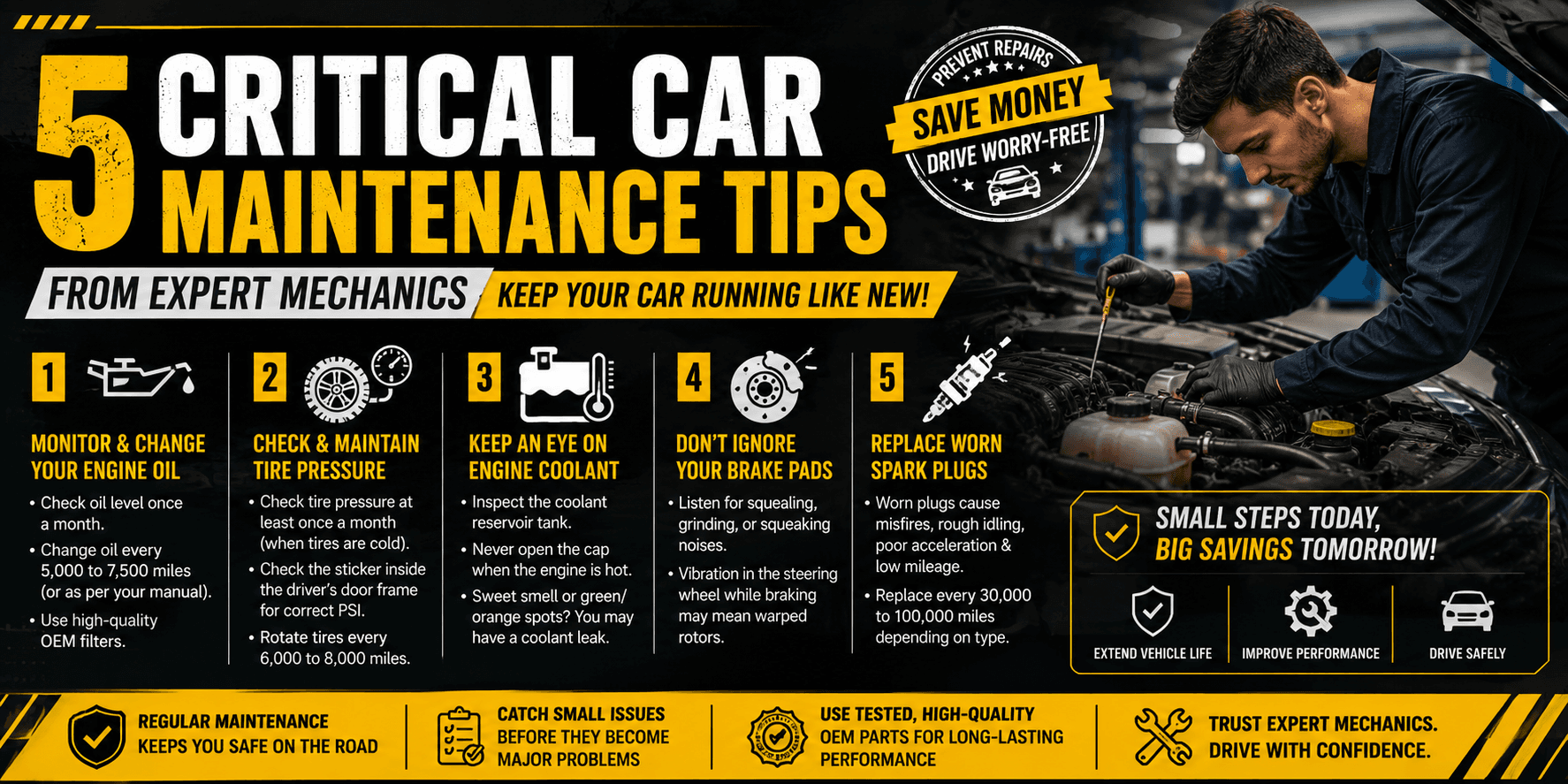
Proper vehicle maintenance is the key to extending the life of your car and preventing costly repairs down the road. Regular checkups can catch issues before they turn into major engine failures or transmission breakdowns.
Here are 5 critical maintenance tips directly from our expert mechanics to keep your car running like new.
1. Monitor and Change Your Engine Oil
Engine oil is the lifeblood of your vehicle. It lubricates the moving parts within your engine, reducing friction and absorbing heat. Over time, engine oil degrades and gets contaminated with dust and metal shavings.
2. Check and Maintain Tire Pressure
Driving on under-inflated or over-inflated tires affects your vehicle's handling, braking, fuel efficiency, and tire lifespan.
3. Keep an Eye on Engine Coolant Levels
Your cooling system prevents the engine from overheating. A low coolant level can lead to blown head gaskets, cracked engine blocks, and thermal damage.
4. Don’t Ignore Your Brake Pads
Brakes are your vehicle's most critical safety system. Worn brake pads can damage your brake rotors, leading to significantly higher repair bills.
5. Replace Worn Spark Plugs
Spark plugs ignite the air-fuel mixture in your engine's cylinders. Worn plugs cause engine misfires, rough idling, poor acceleration, and decreased fuel mileage.
By following these simple guidelines, you can ensure your vehicle stays safe and reliable on the road. If you ever need replacement parts, always opt for tested, high-quality OEM components.