
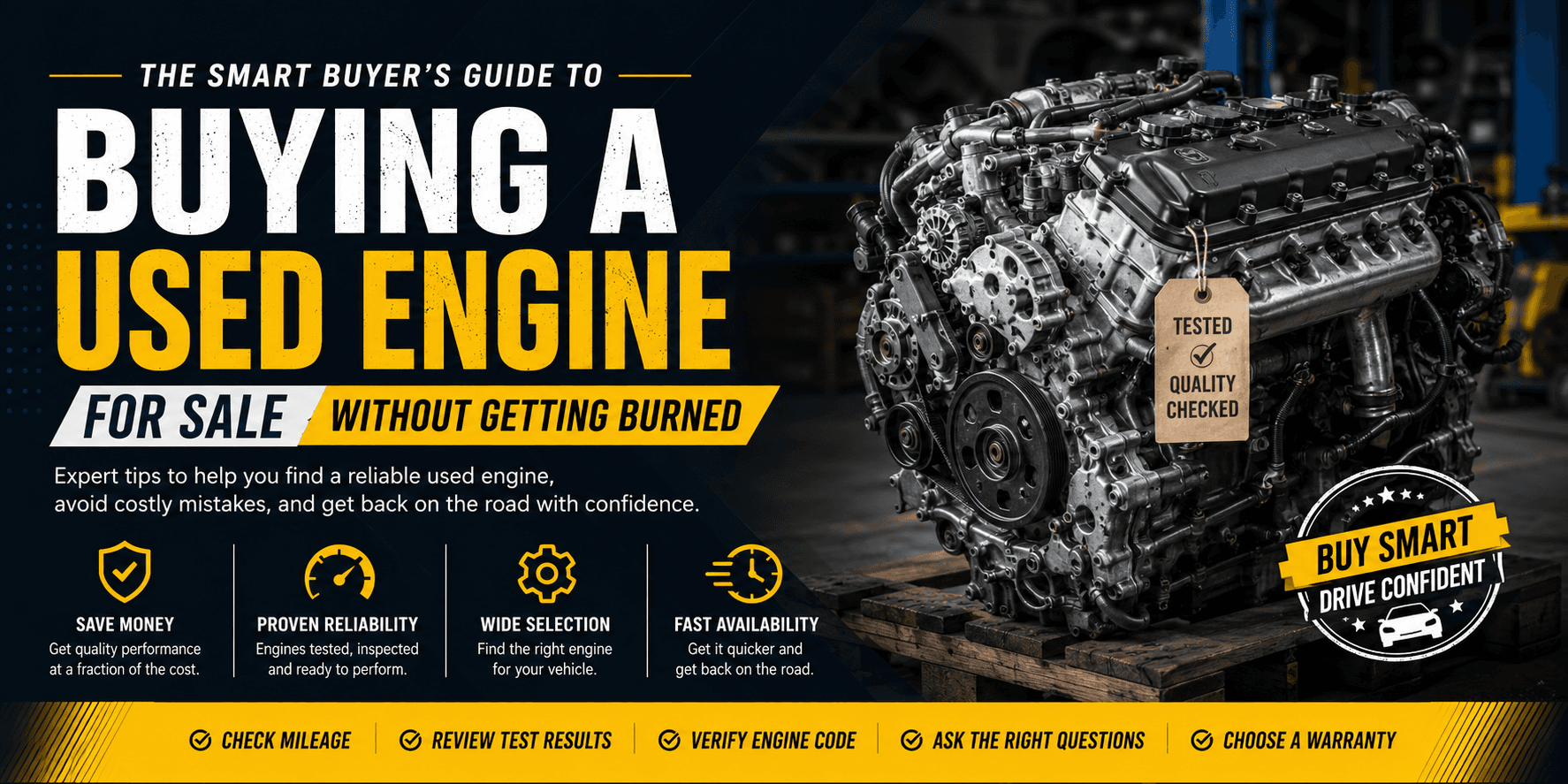
How to Buy a Used Engine for Sale Without Getting Burned
Picture this: you're driving home, and suddenly there's a knock coming from under the hood that definitely wasn't there yesterday. A mechanic takes one look and delivers the news nobody wants—the engine's done.
Now you're at a crossroads that many car owners eventually face: **spend thousands on a factory-new engine**, or find a **used engine for sale** and keep more money in your pocket.
For most drivers, the used route offers the best value. The challenge is that this market isn't tightly regulated. While many sellers are honest, others may try to pass off a worn-out engine as one in excellent condition.
This guide will help you separate the trustworthy sellers from the risky ones before you spend your money.
Why Buying a Used Engine Makes Sense
Run the numbers yourself. A brand-new engine can easily cost more than your vehicle is worth once labor is included. On older vehicles, that investment rarely makes financial sense.
A carefully inspected **used car engine for sale** solves that problem by giving you an engine that has already proven itself in a running vehicle. In many cases, donor vehicles end up in salvage yards because of collision damage—not because of engine problems.
That's the reason salvage operations exist:
This process has helped countless drivers avoid spending a fortune just to get back on the road.
Environmental Benefits
Buying used also reduces waste. Every reused engine means:
While this may not be the primary reason most buyers choose used, it's certainly an added benefit.
Faster Availability
Ordering a brand-new engine can take weeks—or even longer if parts are backordered.
A quality **used engine for sale** can often be shipped within a few days, helping you get your vehicle running much sooner.
Before You Buy: What Actually Matters
Many buyers focus only on finding the lowest price. That's often where expensive mistakes begin.
1. Check the Mileage
Always ask for the exact mileage.
A reputable seller should provide:
There's a significant difference between an engine with **40,000 miles** and one with **150,000+ miles**, even if they appear nearly identical.
2. Ask for Compression Test Results
Compression testing is one of the most important indicators of engine health.
This test measures how well each cylinder holds pressure.
Look for:
Avoid sellers who cannot provide actual compression readings.
3. Inspect the Engine
If possible, inspect the engine before purchasing.
Look for:
A visual inspection can reveal issues that photos may hide.
4. Verify the Engine Code
Never assume an engine will fit simply because someone says it "should."
Always match the engine code to your vehicle.
Even small differences can lead to problems with:
An incorrect engine can quickly turn into an expensive installation headache.
Where Should You Buy a Used Engine?
Local Salvage Yards
Buying locally allows you to:
This reduces much of the uncertainty.
Online Dealers
Buying online is convenient but requires more research.
Look for sellers that provide:
Be cautious of listings that include only:
Don't Buy Based on Price Alone
The cheapest engine isn't always the best deal.
It's usually worth paying slightly more for an engine that includes:
New vs Used vs Remanufactured Engines
| Engine Type | Pros | Cons |
|-------------|------|------|
| **New** | Longest lifespan | Highest cost |
| **Remanufactured** | Rebuilt with new internal components, usually includes warranty | More expensive than used |
| **Used** | Lowest cost and best value | Requires careful inspection |
For vehicles with **80,000+ miles**, investing in a brand-new engine often isn't financially worthwhile.
That's why many owners choose a properly inspected **used engine for sale** instead.
Questions to Ask Before Buying
Before paying, ask the seller:
Reliable sellers answer these questions confidently.
Vague answers or missing documentation are warning signs.
Never Skip the Warranty
Avoid purchasing any used engine that comes **without a warranty**.
Even a **30-day warranty** offers valuable protection if problems appear shortly after installation.
Also review the seller's:
Some sellers won't accept returns after installation, so understand the terms before buying.
Whether you're browsing a general **used engine for sale** listing or searching for **used car motors for sale** that match your vehicle, warranty coverage is one of the most important protections you have.
Don't Overlook Installation
A great engine can still fail if it's installed improperly.
Hire an experienced mechanic and ensure they replace:
These inexpensive parts help prevent costly problems later.
Conclusion
Buying a used engine doesn't have to be risky.
Take the time to:
Follow these steps, and finding the right **used engine for sale** becomes a smart financial decision instead of a gamble—helping you get back on the road without emptying your wallet.